TL;DR
This project proposes a digital and physical experience to combat loneliness and encourage engagement among Indiana University freshmen during new student orientation. Integrating seamlessly with the existing student portal, Juro leverages a mobile app and a wearable ring system to connect students with shared interests through engaging activities and events. This solution aligns with IU's goals of fostering interdisciplinary exposure and empowering students to participate actively in the campus community.
Research
Background:
Loneliness Spike: College freshmen, especially during COVID, experience heightened loneliness due to limited on-campus connections (80% off-campus statistic).
Elevated Vulnerability: Compared to other groups, college students are more prone to loneliness (a reference to higher loneliness levels).
Widespread Issue: Nearly half (48%) of college students feel extremely lonely within the past two weeks.
Chronic Problem: A significant portion (one-third) of college students experience frequent or constant loneliness.
Understanding the Challenge and Audience
Humans are creatures of habit, naturally gravitating towards familiar people and activities. This insight is crucial for understanding the context and user base for Juro, a digital and physical experience designed for Indiana University students. While initially introduced during new student orientation, Juro will eventually be available to existing and incoming students.
However, this comfort zone presents a challenge. Indiana University aims to foster interdependency exposure and student empowerment, encouraging students to explore beyond their existing interests. The underlying problem lies in aligning these business goals with user goals. Students may naturally choose familiar activities and people, staying within their comfort zones. This project aims to bridge this gap.
Aligning with IU's Vision
To ensure Juro aligns with Indiana University's values, I researched the school's mission statement. IU emphasizes fostering a supportive and empowering environment where student experiences beyond the classroom prepare them for academic success and life after graduation. This vision extends not only to academics but also to extracurricular activities, making Juro a perfect fit.
Problem Statement
How can we help college students, especially freshmen and transfers, overcome social isolation and build connections on campus?
Target Audience
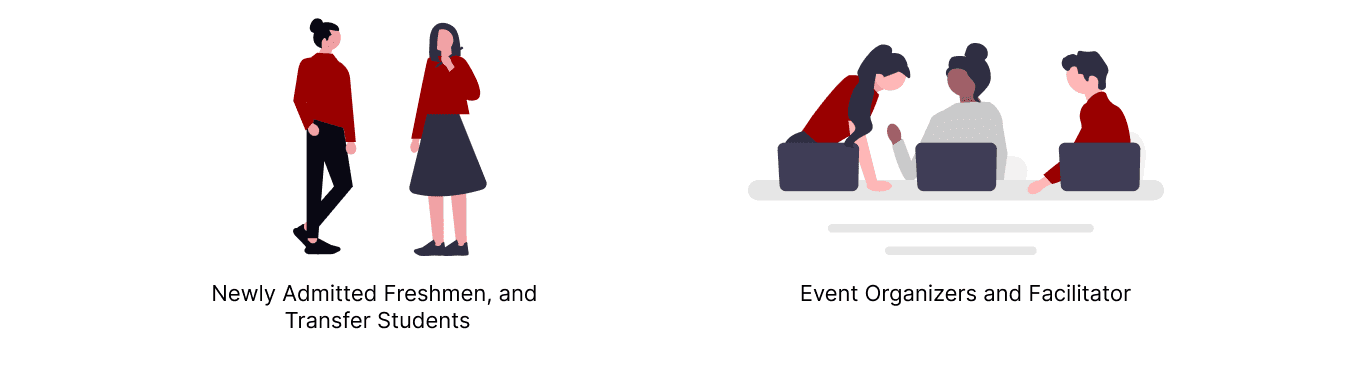
We refined our focus audience of Indiana University student groups, particularly newly admitted freshmen and transfer students. Often feeling isolated in a new environment, these students benefit from Juro's ability to combat loneliness and connect them with like-minded peers. Transfer students facing the challenge of adjusting to a new college town can leverage Juro to ease the transition and build friendships. While the primary focus is on students, and after further iterations we even included event organizers to facilitate the system.
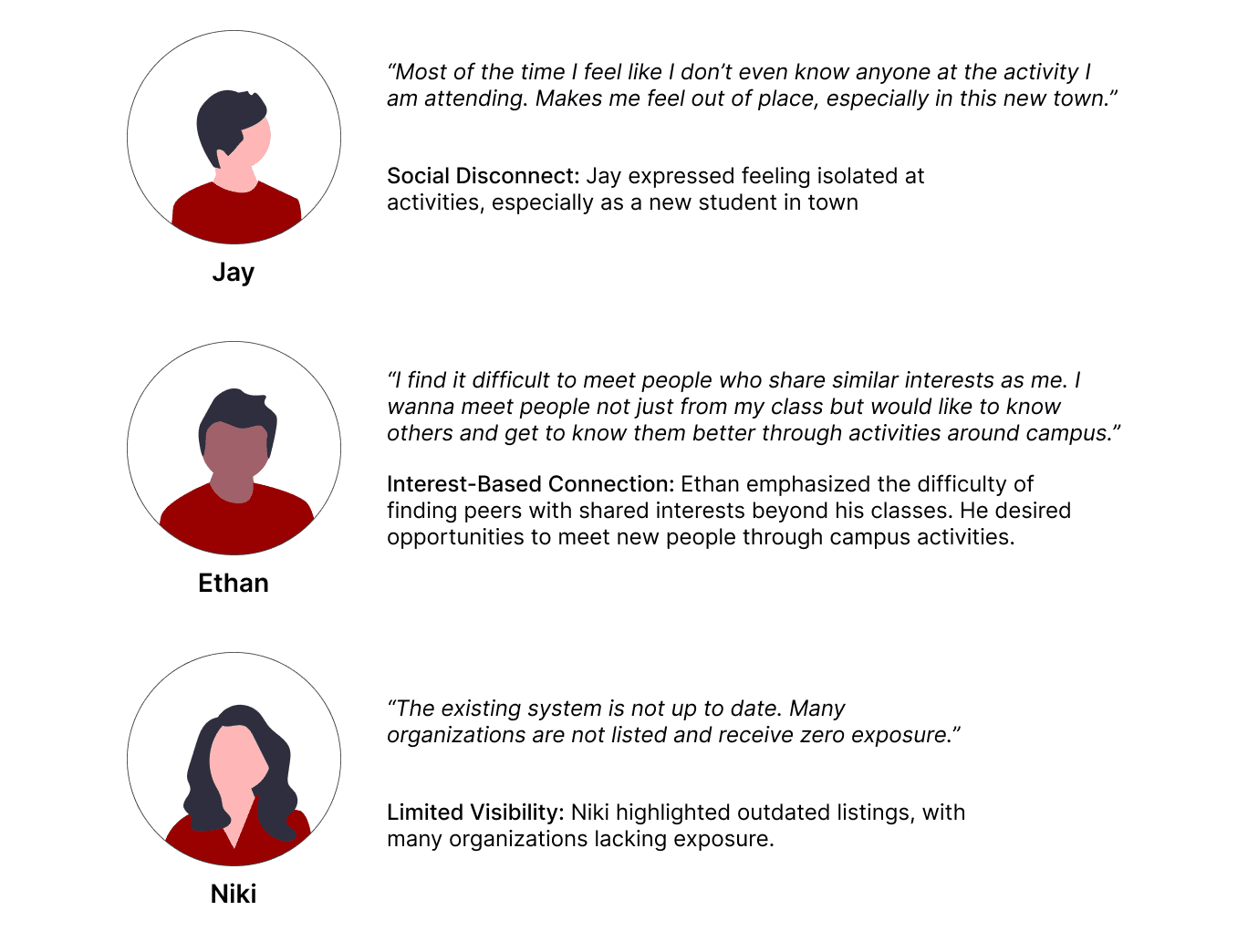
User Interview
To gain a holistic perspective on student needs, I interviewed Indiana University peers, setting aside my opinions on the existing student organization structure.
Developing a Strategy: Fostering Connection at IU
Juro goes beyond simply browsing student organizations. Recognizing the challenges identified in the research, Juro's strategy focuses on fostering connections within the Indiana University community:
Discovery and Exploration: Juro helps students discover new organizations and activities that align with their interests.
Social Interaction: The platform facilitates interaction between students with shared interests, reducing feelings of isolation.
Active Participation: Juro empowers students to become advocates for their existing organizations, promoting engagement and a sense of community.
Keeping these things in mind, I came up with the following mission statement:
Juro aims to create a digital experience that connects, engages, and empowers Indiana University students to become active participants in the campus community.
Juro achieves its mission through three key goals:
Interest-Based Matching: Juro connects students with activities and organizations that align with their passions, fostering a sense of belonging.
Expanding Horizons: The platform recommends events and organizations outside of a student's immediate interests, encouraging exploration and interdisciplinary exposure.
Leadership Development: Juro empowers students to advocate for their existing organizations. By creating a platform for recruitment and promotion, Juro fosters leadership skills and strengthens the campus community.
With the goals established, we have a better idea of our intent with storyboarding, paper mockups, and designing rough wireframes for the Ul. Time to start designing!
After a lot of design iterations and brainstorming, we came up with the idea of a Random Roulette Idea Generator. The design process for this is as follows:
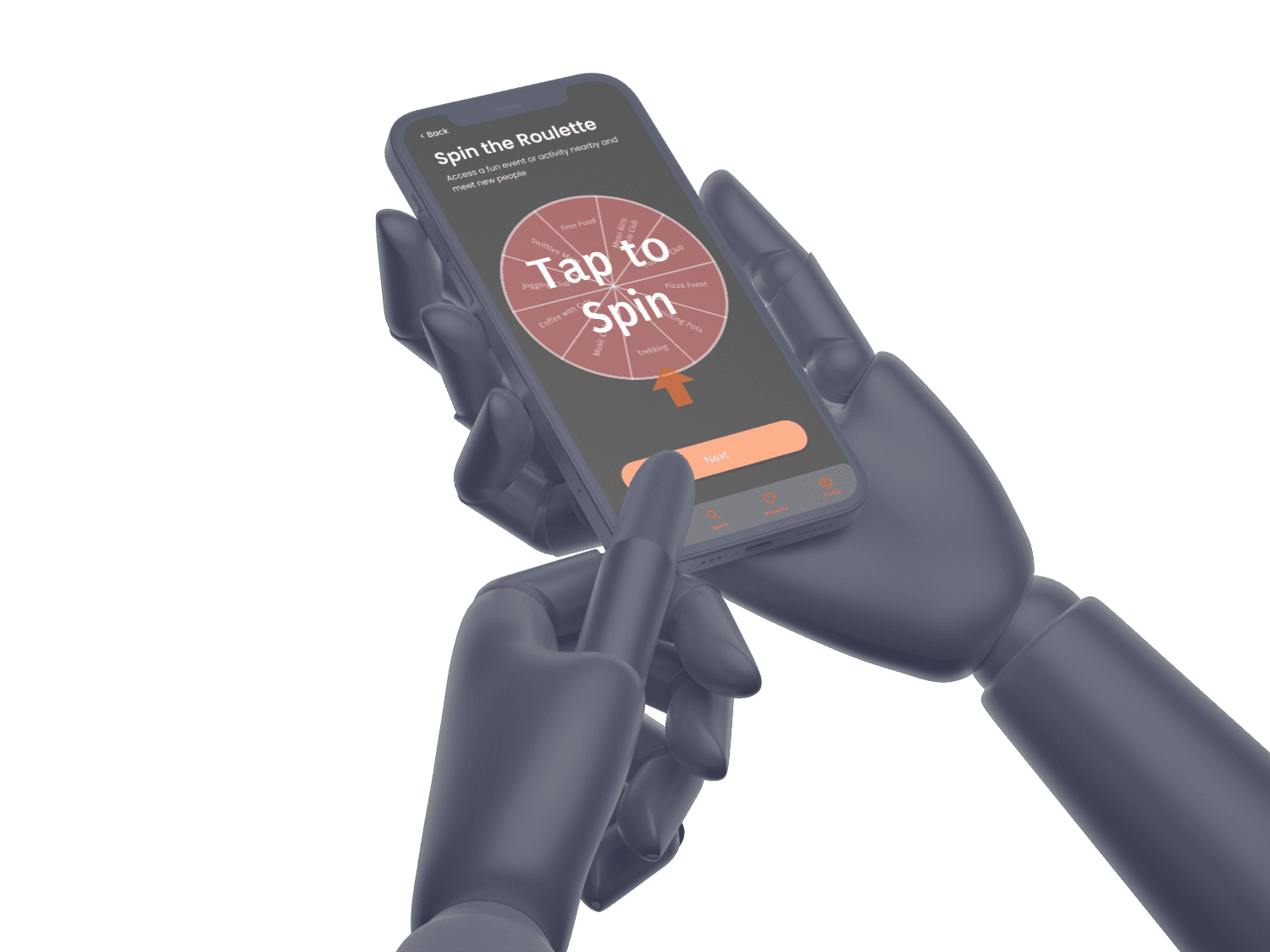
Choose a few activities depending on your tastes and a few things the system has advised. As soon as you spin the roulette, random activity will be generated, and all of the events and activities will be taking place close to you.
With merely a spinning wheel on your phone, this feature won't require any additional sensors. After proposing activities, the app will let you sign up for the event or activity and/or provide any coupons or gift cards that can be redeemed there.
Storyboard
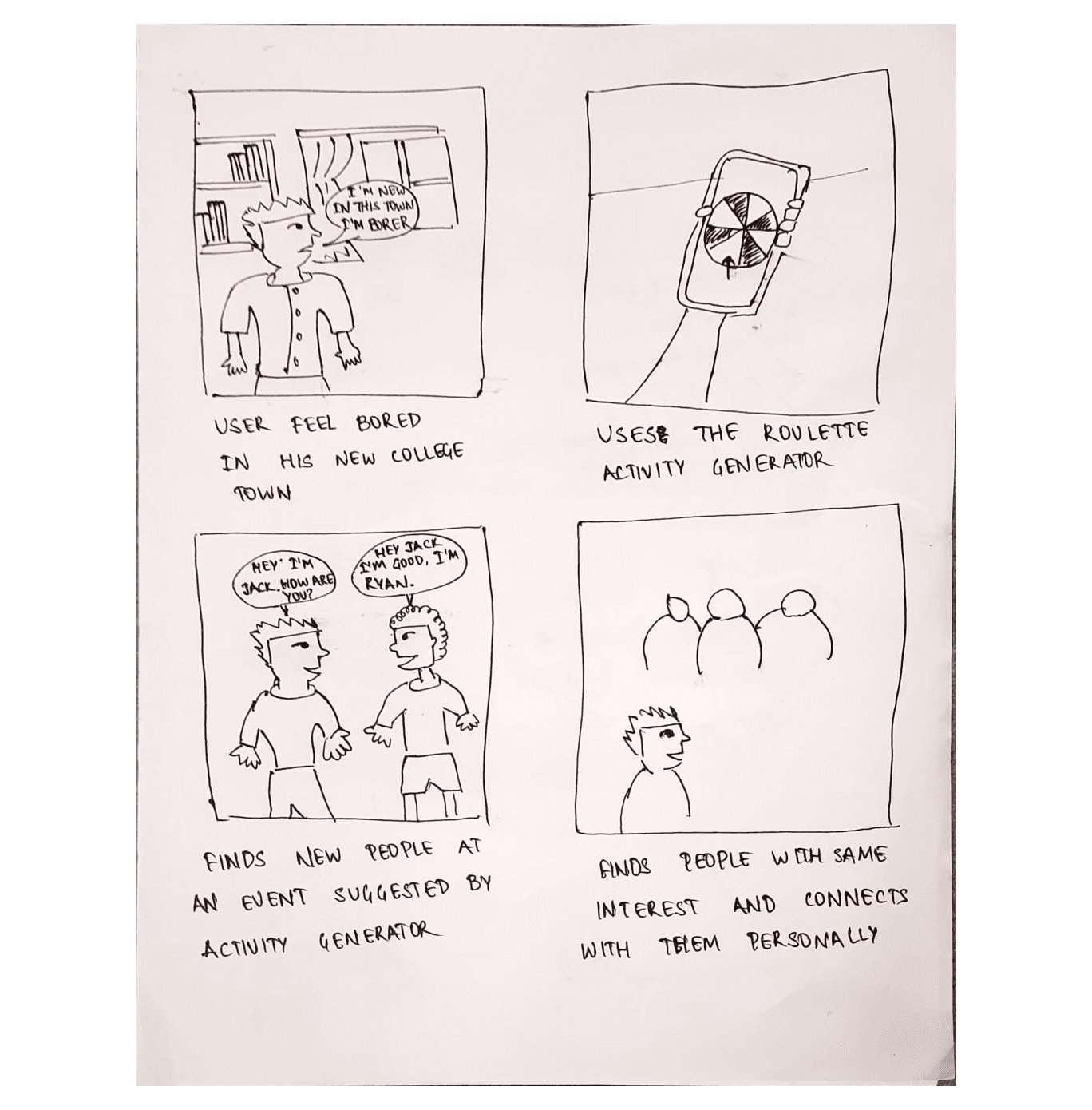
The storyboard outlines the exact steps a potential user must take to identify and meet people he/she is interested in using the app.
Paper Mockups
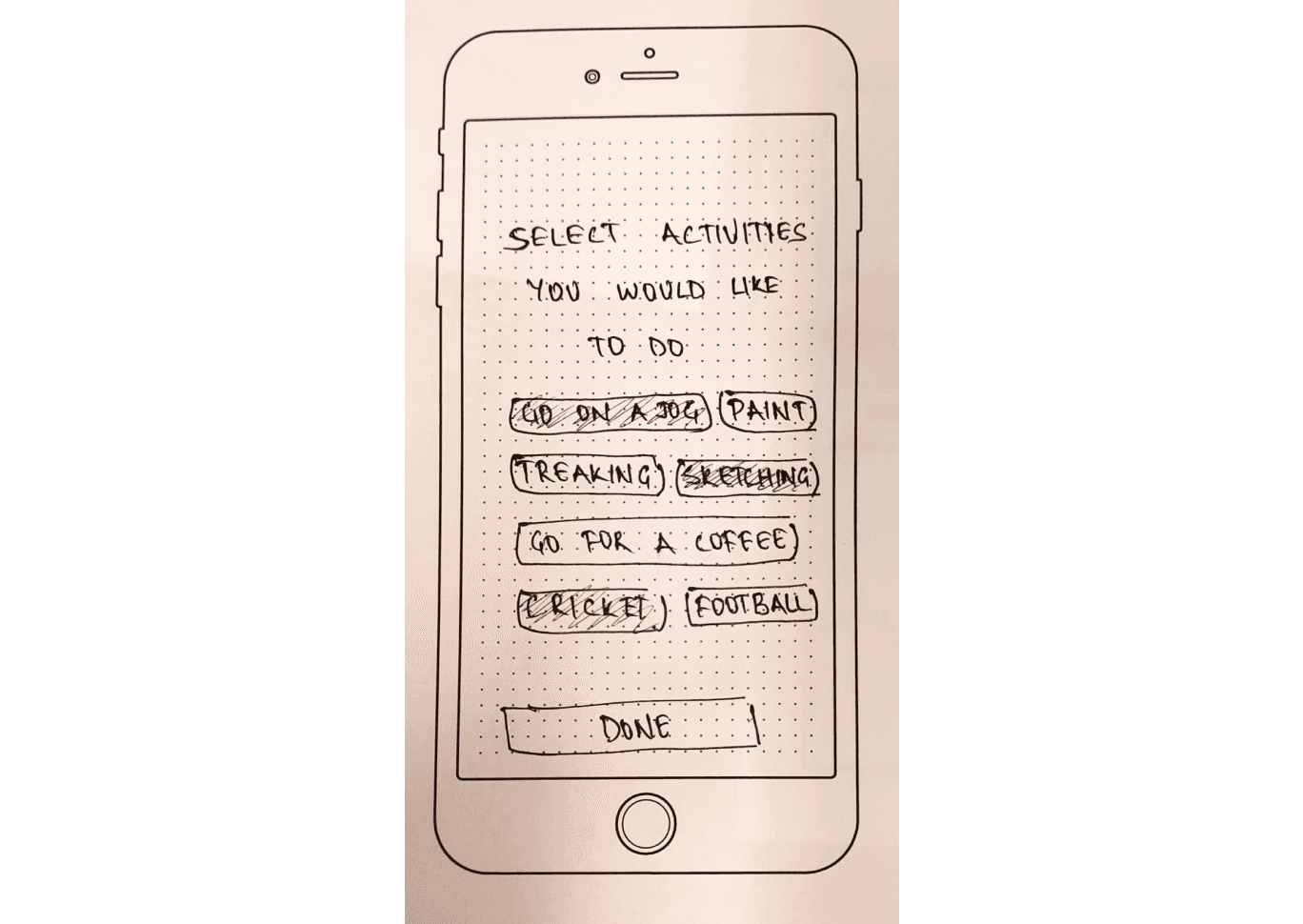
If you are a user, especially a new user, the app will ask you a few questions during the first signup process depending on your interests, and will attempt to include those activities in the Roulette.
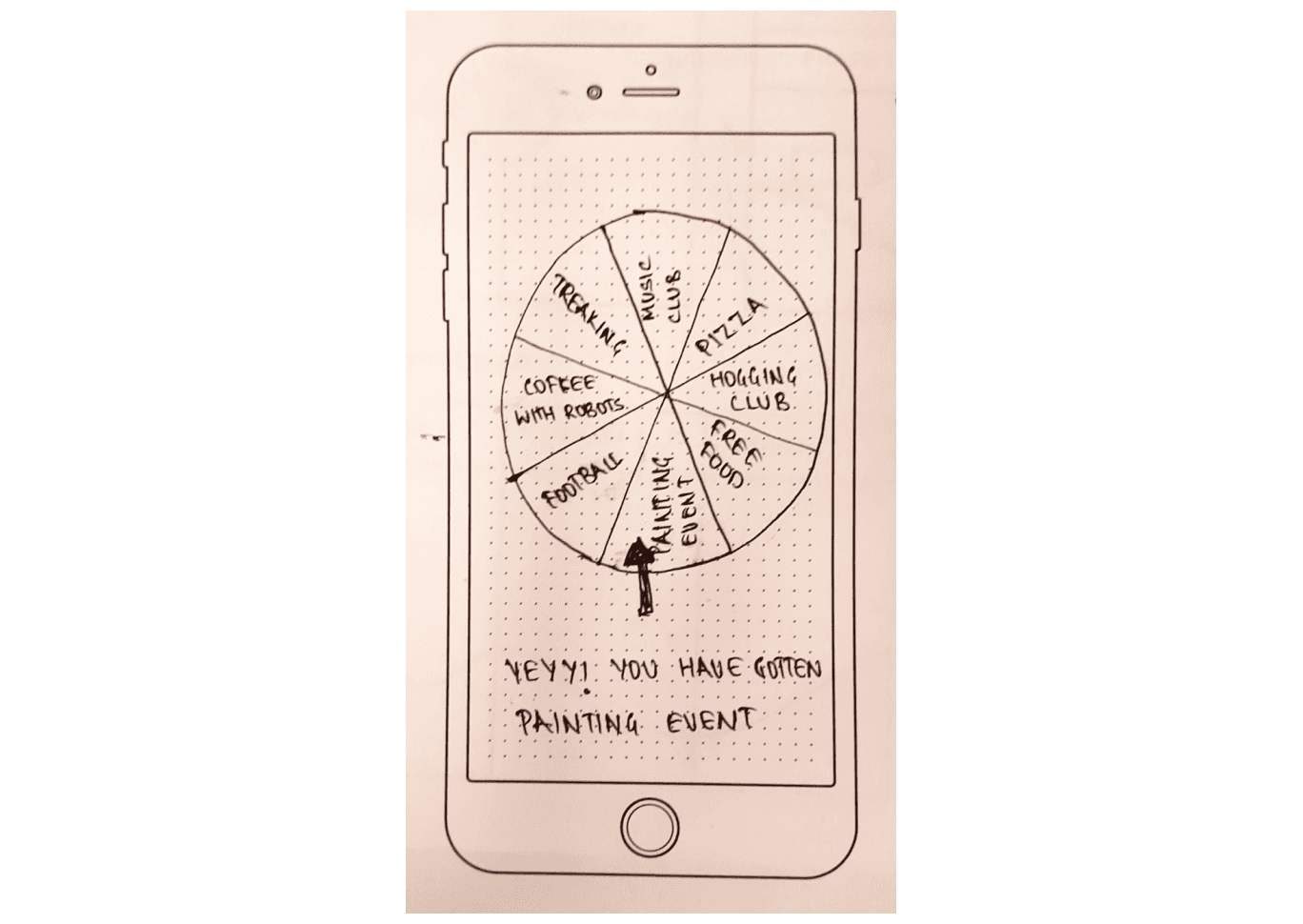
Juro's activity roulette isn't purely random. It combines activities you prioritized during signup with a sprinkle of exciting surprises – nearby events and activities happening on campus. This unique blend encourages you to explore new interests while staying connected to your initial preferences.
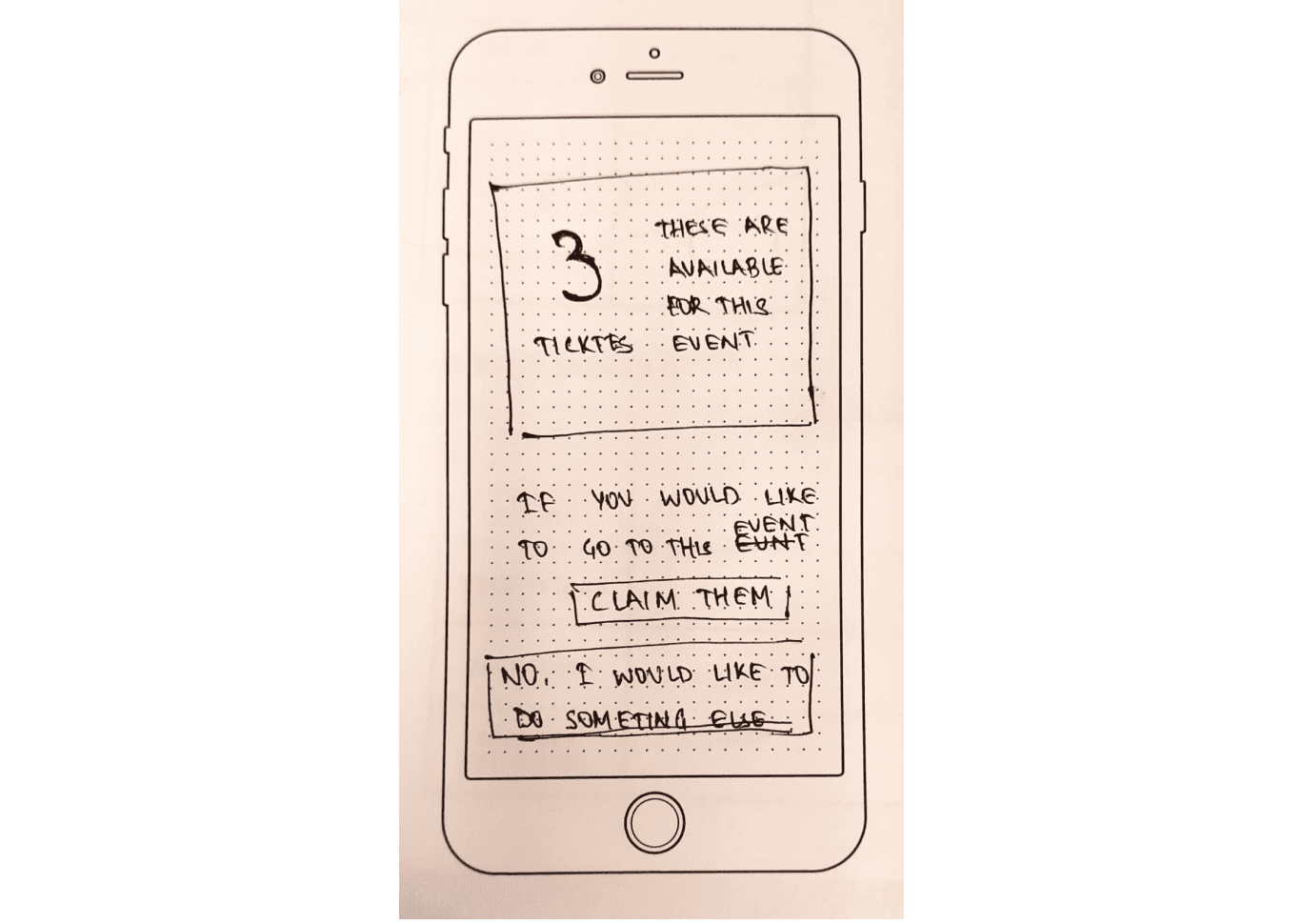
Offering gift cards or free events in your area would encourage them. The user can spin the roulette wheel to choose what they want to do if they are still unsatisfied with the system's proposed activity. Only a few times a day may the customer spin the roulette wheel, giving them an exclusive experience.
Design Justification:
Making use of a random roulette activity generator can introduce users to fresh contacts and interests. By generating tasks at random, the application can motivate users to explore new avenues and give new experiences a try. Deeper and more satisfying social connections could arise from this.
Focusing on university towns might help to ensure that the software is relevant to the target user group. College students are continuously looking for interesting and creative ways to socialize and learn new things. The app can satisfy this specific need by focusing on college communities.
Description of the System Prototype
Juro's prototype tackles loneliness and social disconnection on college campuses through a two-part system:
Mobile App with Personalized Profile: Users create profiles with interests and preferences. The app stores user history, data, and connections, fostering personalization.
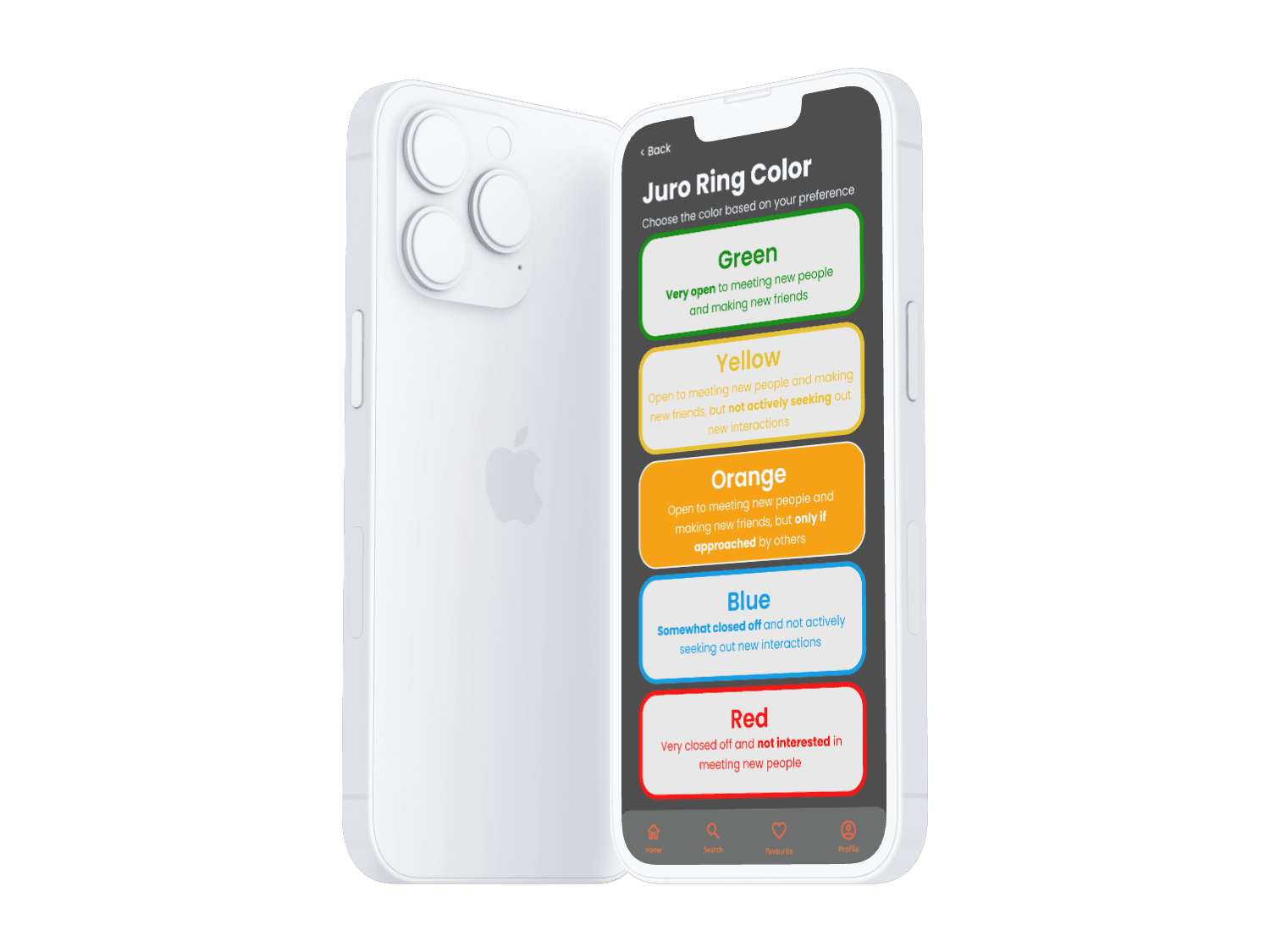
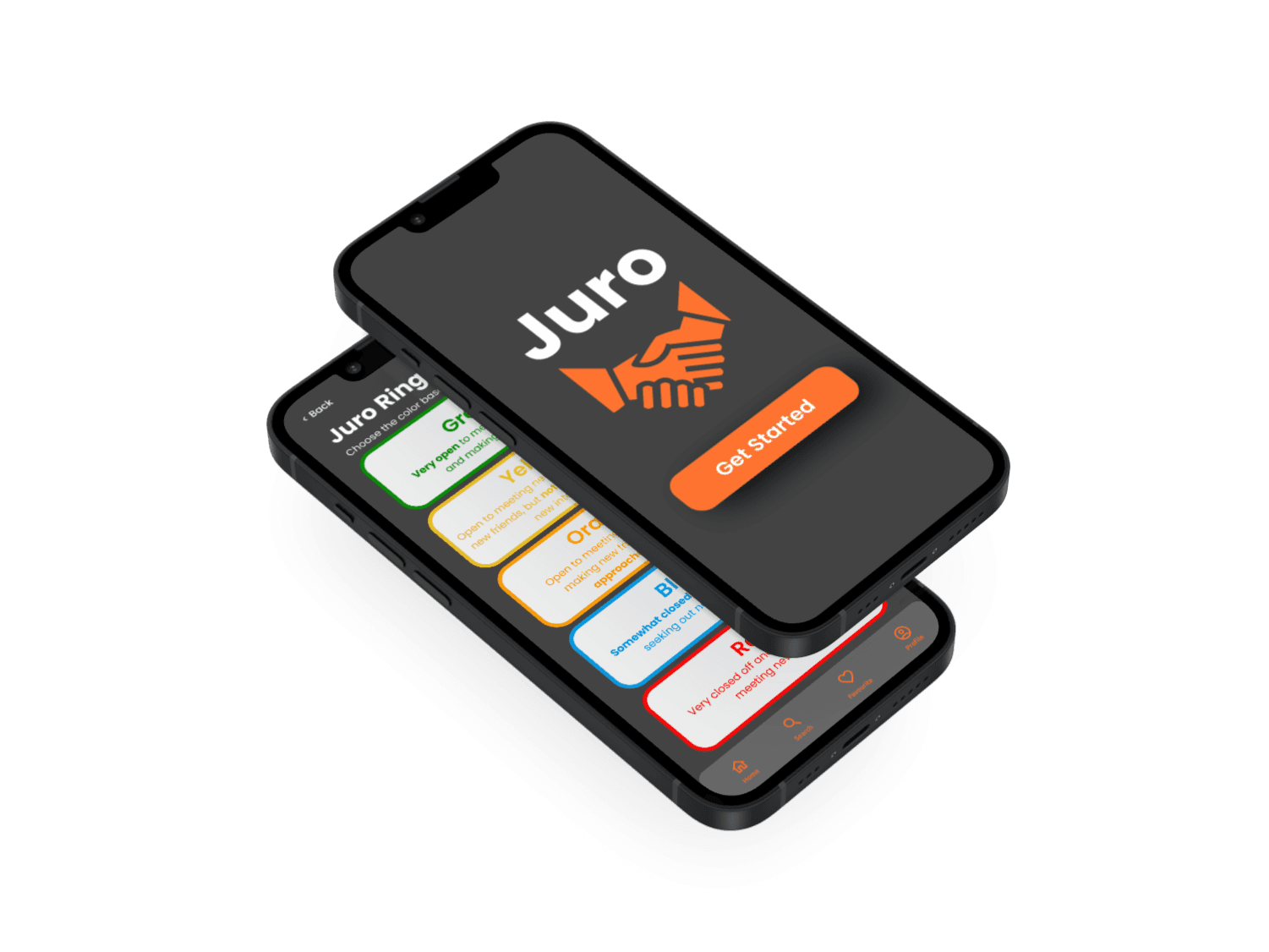
Wearable Ring for Openness Indication: The ring displays the user's level of openness to interaction via an LED light (green to red). This facilitates communication at events.
Overcoming Loneliness and Disconnection: Juro aims to build meaningful communities and connections. The app's features help users overcome isolation and find common ground.
Combating Decision Paralysis: The "activity roulette" feature suggests random activities, reducing indecisiveness and encouraging exploration when meeting new people.
Detailed Prototype
The following functionalities would be included in the mobile app:
Profile creation: Students would be able to add their names, interests, and preferences to build a profile. Additionally, they would have the option to upload a self-portrait.
Event browsing: A list of forthcoming events and activities taking place on campus would be available for students to peruse. Students could filter events by date, time, location, and interest using the app.
Random roulette activity generator: By pressing a button, students might create a random roulette exercise. The student's profile details and current location would be taken into consideration by the app when suggesting an activity.
Openness indicator: The app would show how receptive a pupil is to social interaction. The wearing of the ring's LED light would show the degree of openness exhibited by the student.
The user will instinctively select the "get started" option to start their friend-activity-matching journey.
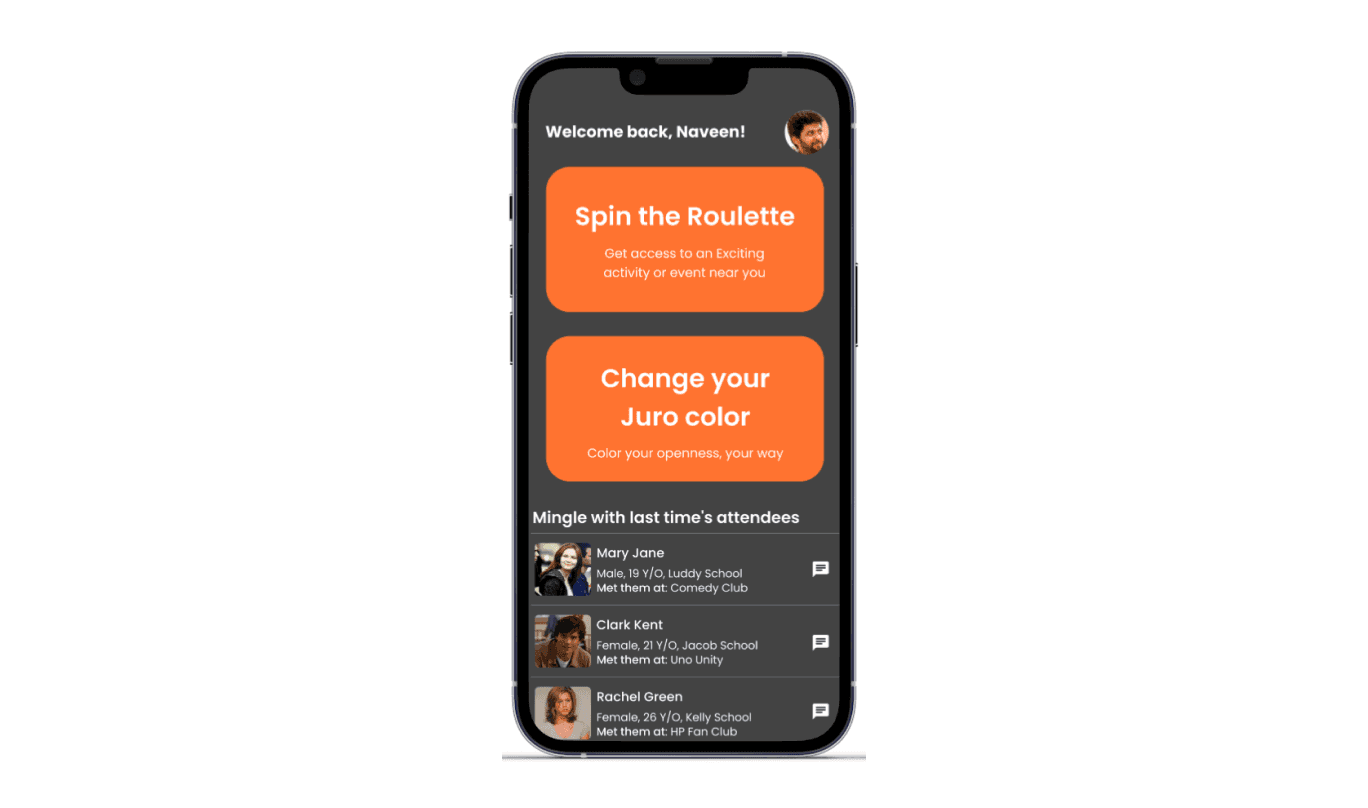
As soon as the user opens the app after login and setting up their account they are faced with two options:
Spin the Roulette- Random activity generator
Changing the Juro Ring color- Based on the openness of the user
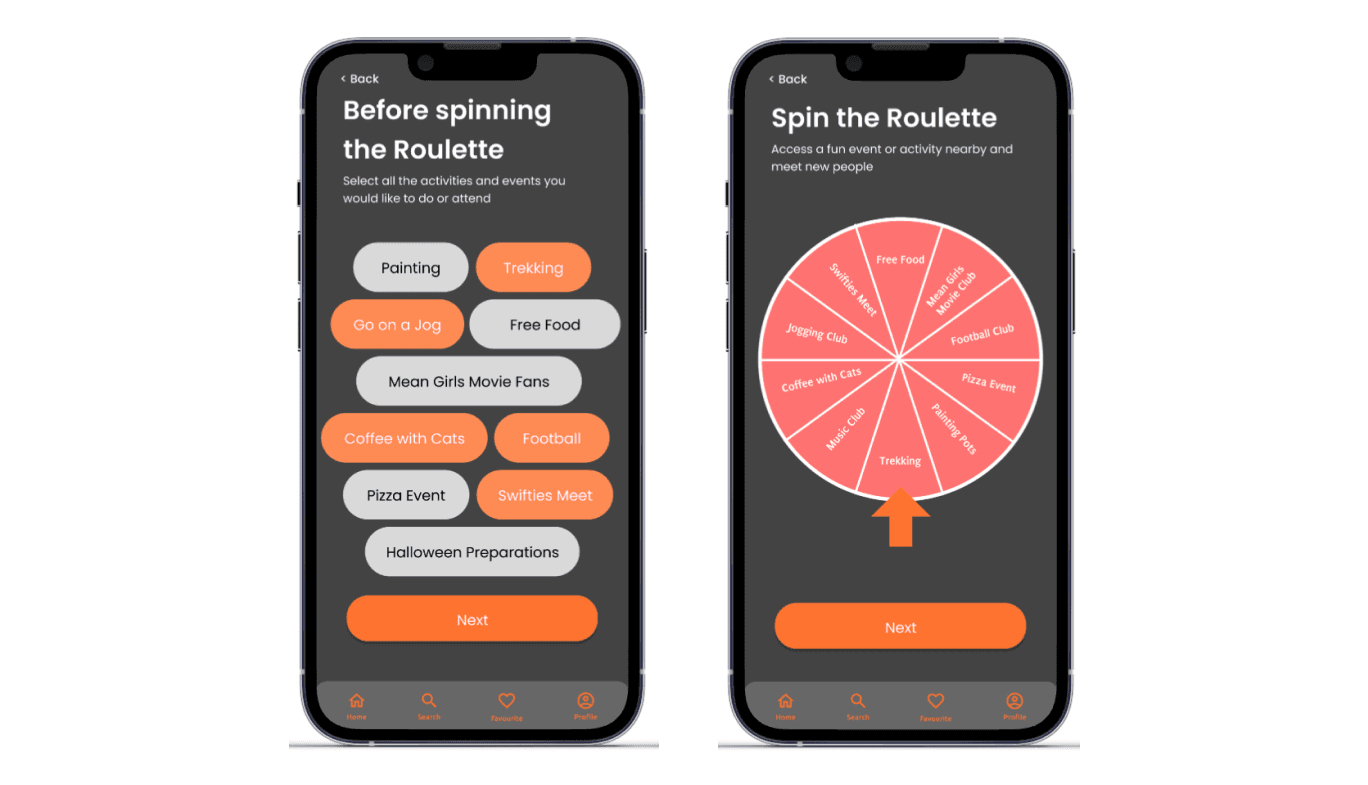
The user can now begin utilizing our app for the purpose for which it was intended after logging in. To start a chance meeting with someone you might become friends with, click the roulette activity button. This takes them to the random activity roulette wheel, which they spin logically to produce another random activity.
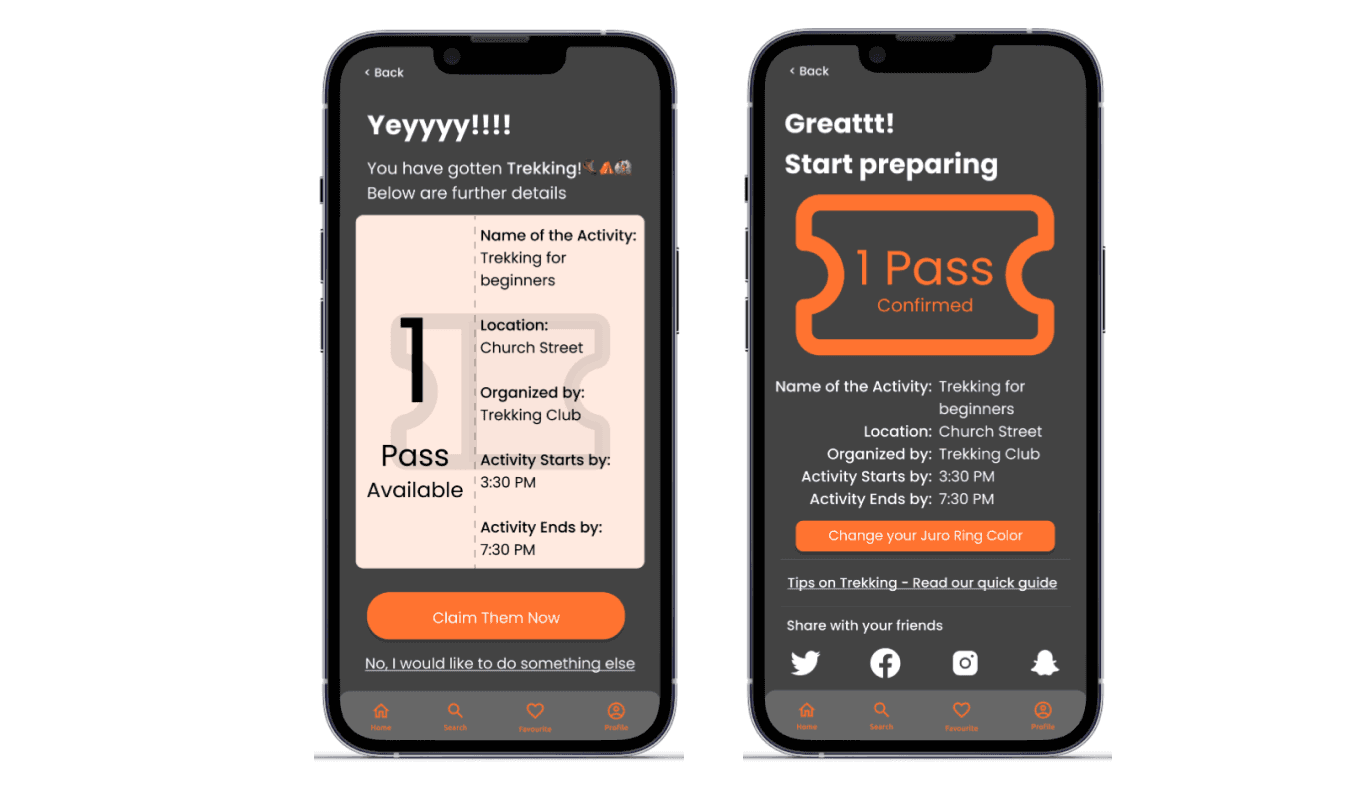
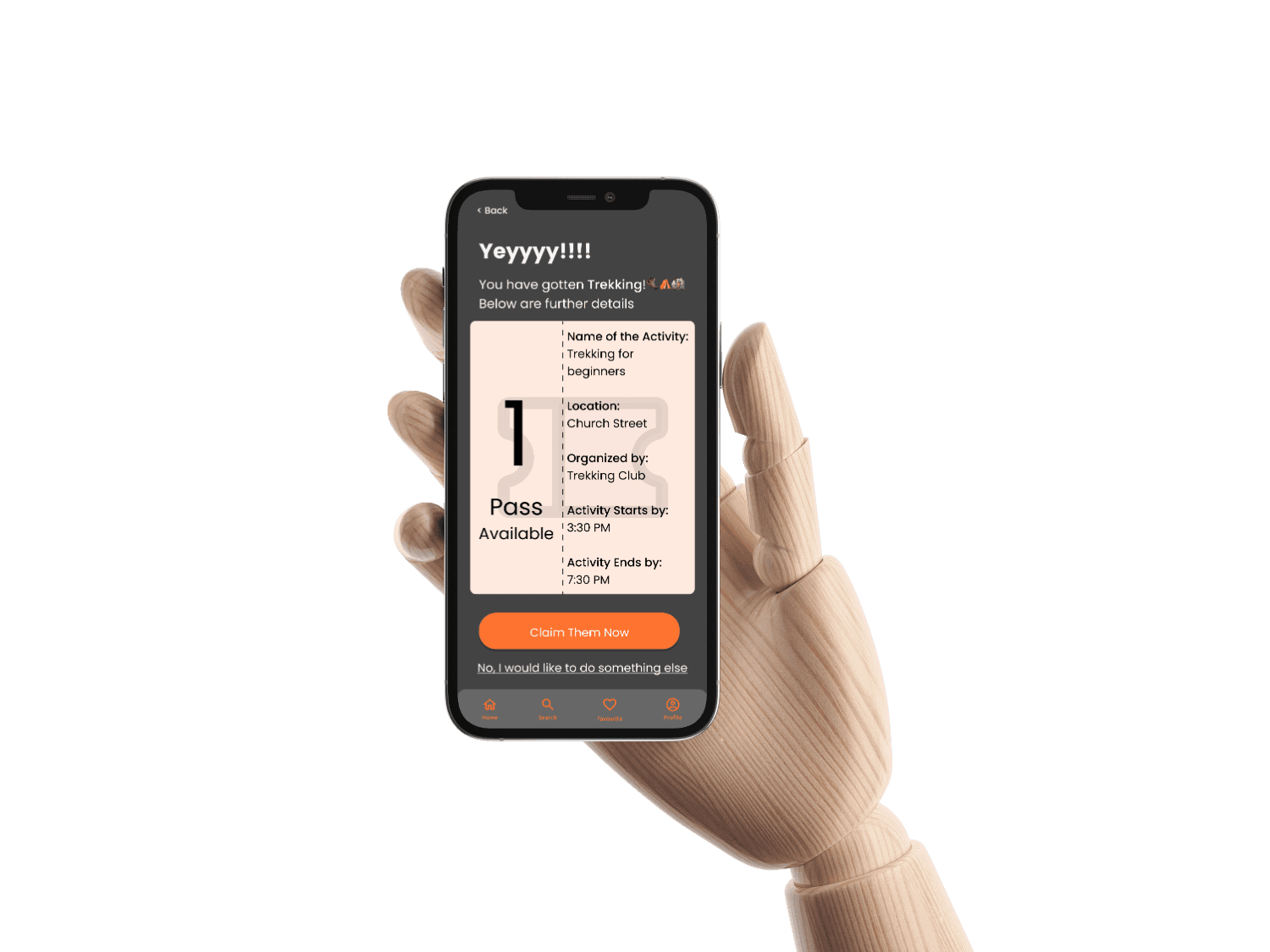
After selecting an activity through the app, users can validate their choice by securing a virtual ticket within the platform. If upon arrival they find the activity isn't a good fit, Juro offers a chance to explore further. With another spin of the "activity roulette," users can discover a new option. Additionally, the activity panel within the app provides a convenient way to adjust the status of their Juro ring. This allows users to update their level of openness to interaction directly at the event, giving them control over how they connect with others.
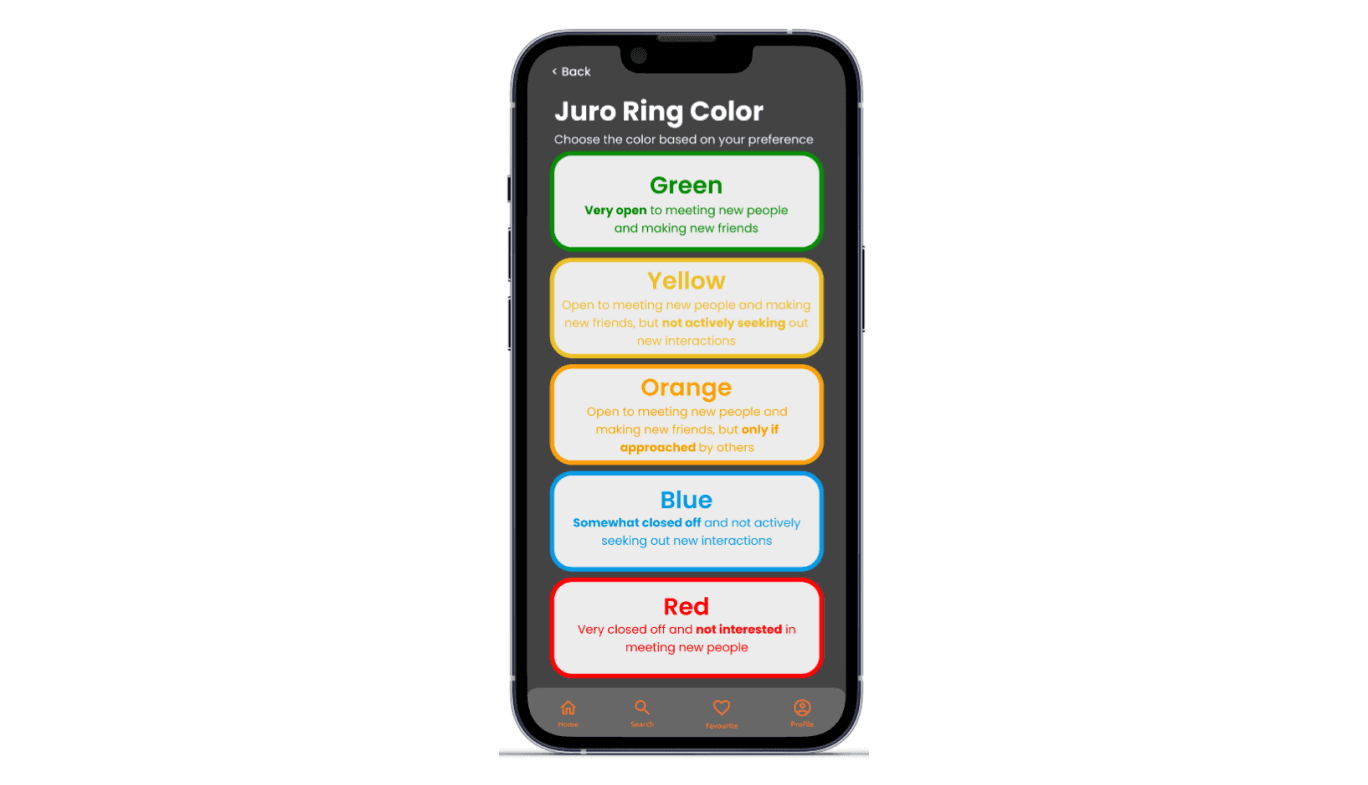
After choosing their preferred activity, the user can adjust the ring's color to reflect how willing they are to socialize with others at that activity or event.